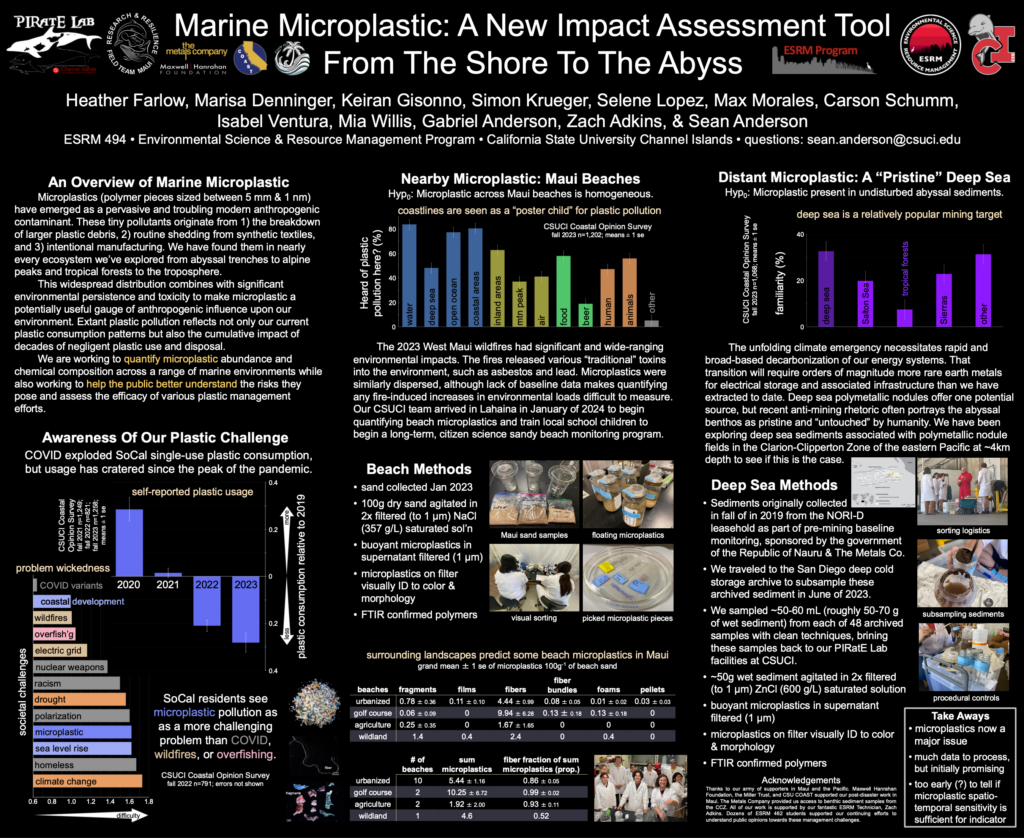
I have been involved with the Environmental Science and Resource Management (ESRM) Lab at California State University Channel Islands for over six years. The first research project I participated in was in an effort to determine to what extent microplastics have inundated our coastal ecosystems. The first wave of this project involved taking core samples of sand at various beaches across Santa Barbara, Ventura, and Los Angeles counties. Small hand-gathered sand samples were collected as well. Via a series of particulate filters, we concluded that every single sample and sand crab at every site contained multiple shapes and sizes of microplastics.

This project has continued to expand not only to other states in the U.S., such as Louisiana, Hawaii, and Alaska, but even beyond to the Cook Islands and Galapagos Islands. While these sediment samples continue to hold resounding results that indicate the presence of these plastics, now many environmental management agencies are looking to standardize the various types of microplastics present in water supplies, soils, and other relevant spaces.
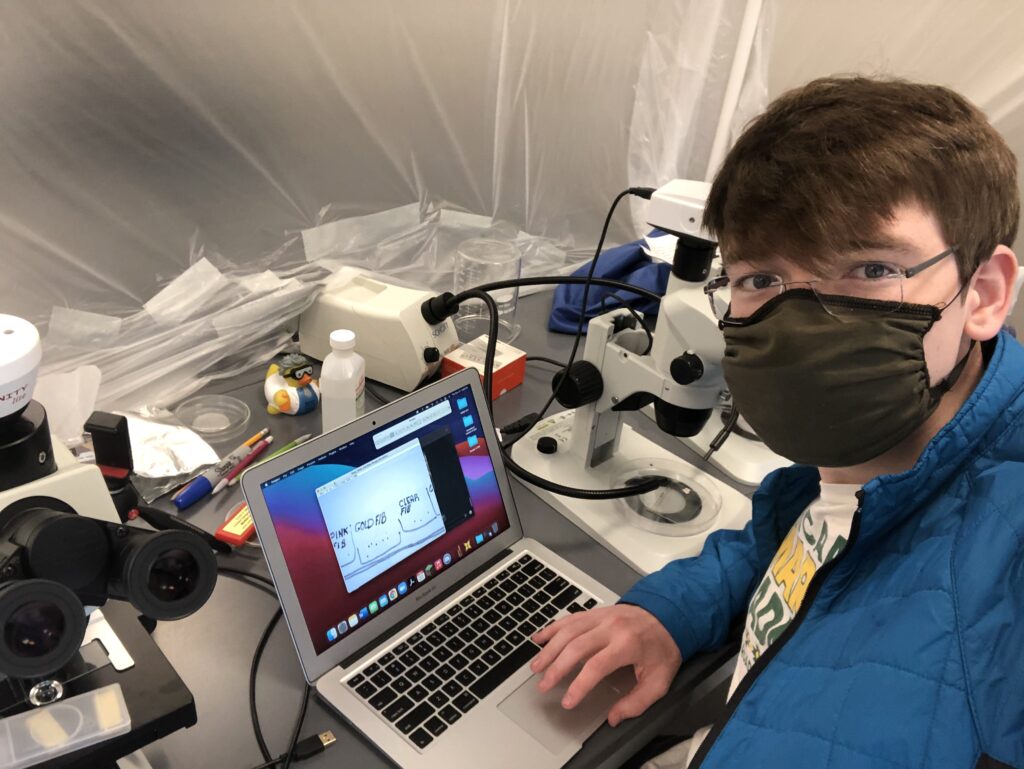
In more recent years, the project has shifted to better understanding these plastics rather than identifying their presence. This initially took the form of delicately arranging plastics by hand under a microscope and using imageJ to document them. Not long after, the lab took on some new equipment in the form of an FTIR microscope which uses chemical processes to identify the materials present in these microscopic plastics and catalogue noteworthy traits. Our efforts have pivoted since the project’s inception, with the hope of better understanding the sources of this pollution and how to mitigate future impacts of remaining plastic products.