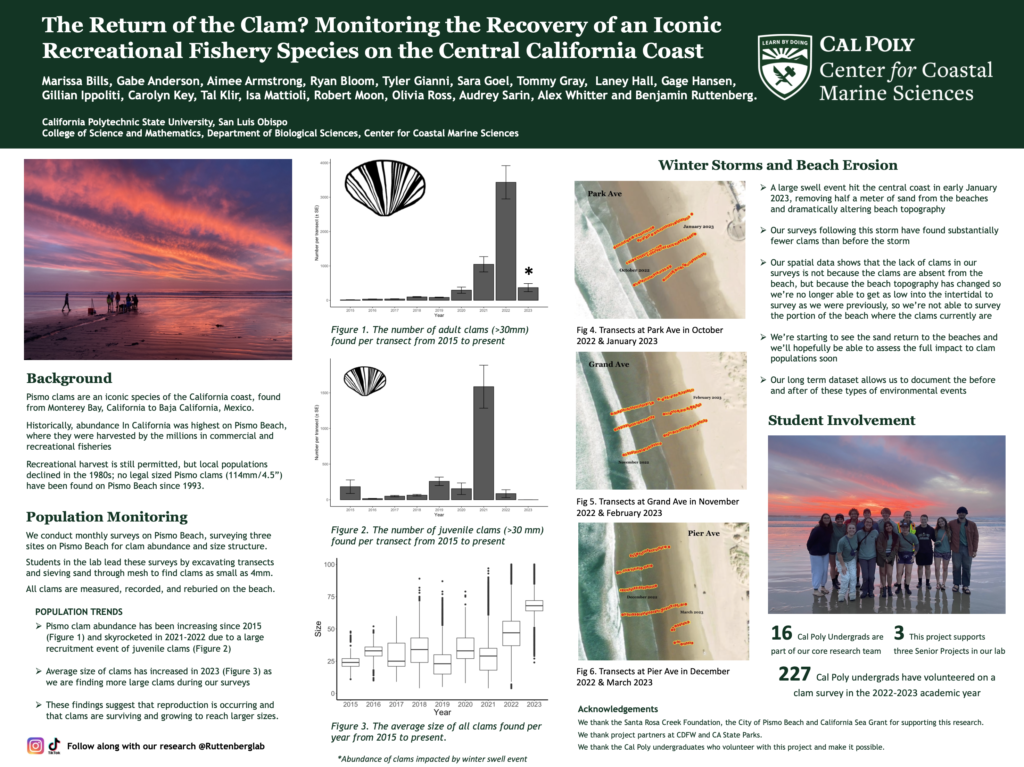
This project, under the Marine Conservation Lab at California Polytechnic State University San Luis Obispo, aims to better understand and gauge the recovery of the pismo clam population. For many decades in the 1900’s, the pismo clam had a flourishing population, so much so that beachgoers from near and far were drawn to the beaches of Pismo among many other regions they inhabited on the California coast. However, towards the close of the century, the population steeply declined and the once numerous, robust clams began to dwindle from the public eye.
Only in recent years have locals begun to spot them along the beaches of Pismo yet again. While they are very numerous, many are far below the legal size to collect (4 inches). Furthermore, their increasing population still brings many questions. What spurred this sharp turn in the direction of recovery? How can we convey to the public the necessity of this species as a member of its ecosystem and prevent the prevalent issue of poaching? There are no discernable clear answer at the moment, but as we gather data monthly, we are creating a longterm dataset to help better inform our understanding.
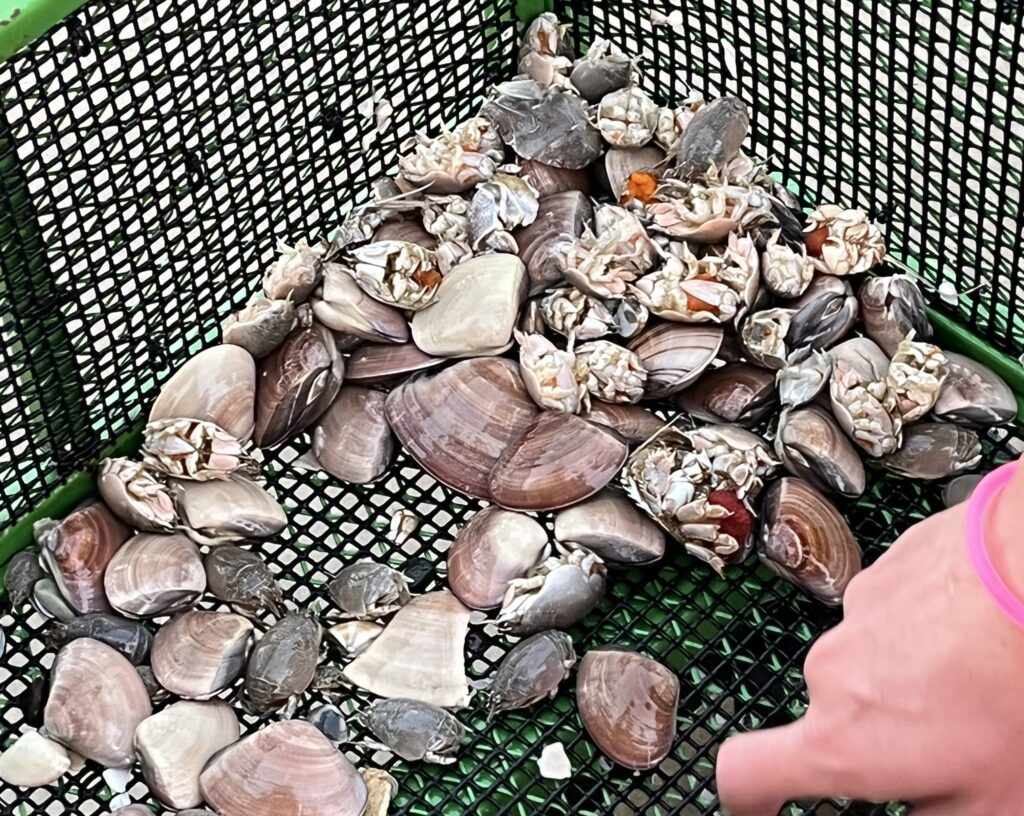
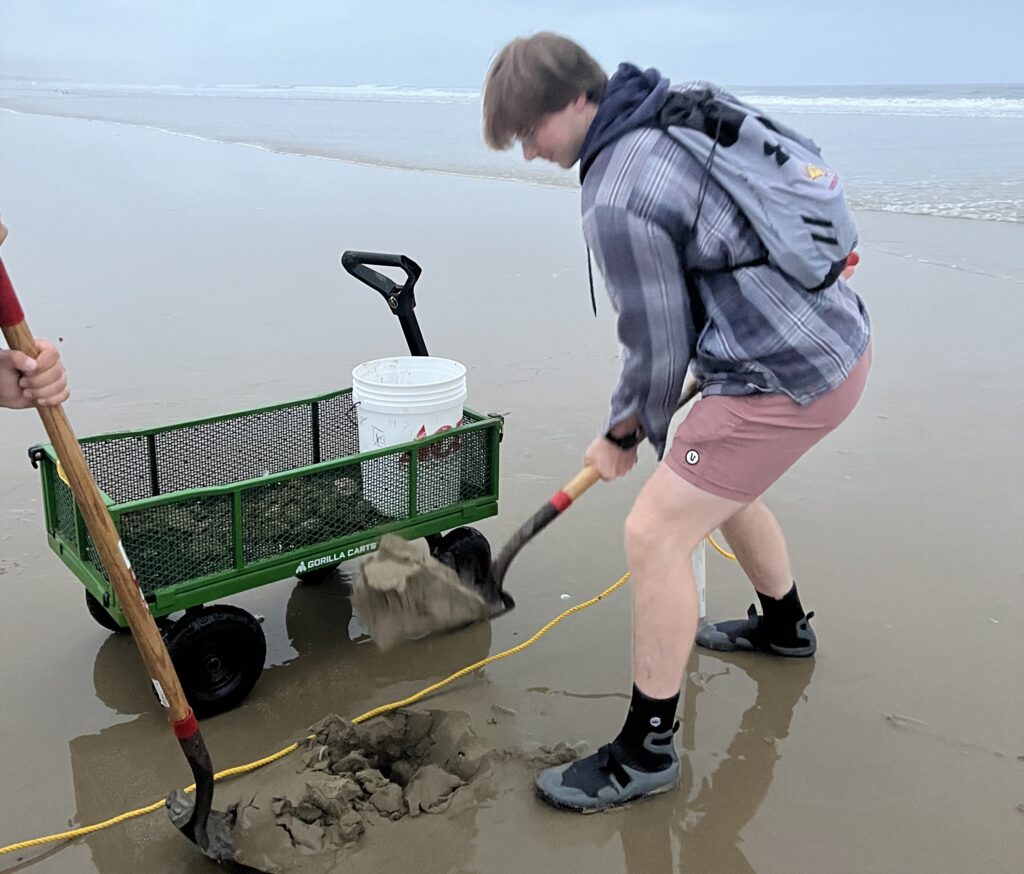
The bulk of the field work is comprised of digging transects perpendicular from the upper bound of the water line down to the actual water at low tide. Here we dig out three meter 1 foot deep sections of sand and record the number and size of any clams we find. The other main large-scale effort is to tag-and-release clams with a small QR code such that anyone who finds a tagged clam can scan it and indicate that to us. These are just a few areas of this conservation effort I am involved in, but as we continue to learn more about the clams’ overall condition, we will continue to adapt our strategy of monitoring them.